
In chemical, biological, and pharmaceutical laboratories, the fume hood is one of the most critical pieces of safety equipment. It effectively controls hazardous gases, dust, and vapors, ensuring a safe and clean working environment.
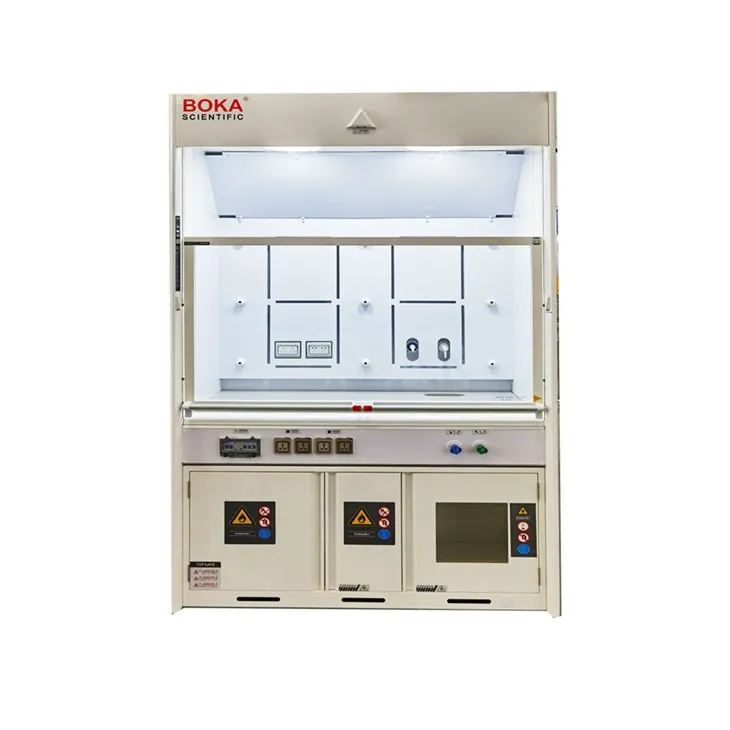
What Is a Fume Hood?
A fume hood is a local ventilation device designed to contain and exhaust harmful substances generated during experiments. It serves as the first line of defense in laboratory safety, widely used in chemical synthesis, pharmaceutical preparation, and biological research.
Core Working Principle of a Fume Hood
Fume hoods operate based on aerodynamics and negative pressure control, with the following key mechanisms:
Negative Pressure Containment
The fume hood’s built-in blower system creates a stable negative pressure zone inside the cabinet, preventing toxic fumes from escaping into the lab. When the sash (front window) is opened, external air flows inward at a controlled face velocity (typically 0.3–0.5 m/s), forming an air barrier.
Airflow Direction & Exhaust
Ducted Fume Hoods: Directly expel contaminated air outdoors via a lab’s central exhaust system.
Ductless (Recirculating) Fume Hoods: Use HEPA or activated carbon filters to purify air before releasing it back into the lab.
Face Velocity Control
The face velocity (airflow speed at the hood opening) is critical for performance:
Too low (<0.3 m/s): Risk of gas leakage.
Too high (>0.8 m/s): Turbulence may disrupt experiments.
Modern fume hoods feature sensors and auto-adjusting systems to maintain optimal airflow.
Types of Fume Hoods
TypeKey FeaturesBest For
Ducted Fume HoodHigh safety, expels fumes outdoorsCorrosive/toxic chemicals
Ductless Fume HoodFilter-based, no ductwork neededSmall labs or temporary setups
Auxiliary Air HoodReduces energy use by mixing external airHigh-ventilation labs
Explosion-Proof HoodAnti-static, corrosion-resistant materialsFlammable/explosive substances
How to Choose the Right Fume Hood?
Cross-border buyers should consider:
Application: Will you handle acids, solvents, or radioactive materials?
Ventilation Type: Does the lab have an exhaust system? If not, opt for ductless.
Certifications: Look for EN 14175, ASHRAE 110, or OSHA compliance.
Energy Efficiency: Variable-speed blowers reduce power consumption.
Maintenance & Safety Tips
Regularly check airflow velocity and filter efficiency.
Avoid clutter inside the hood to maintain proper airflow.
Keep the sash at the recommended height (often marked with a safety line).
Conclusion
Fume hoods are the unsung heroes of lab safety, combining advanced engineering with critical protection.